


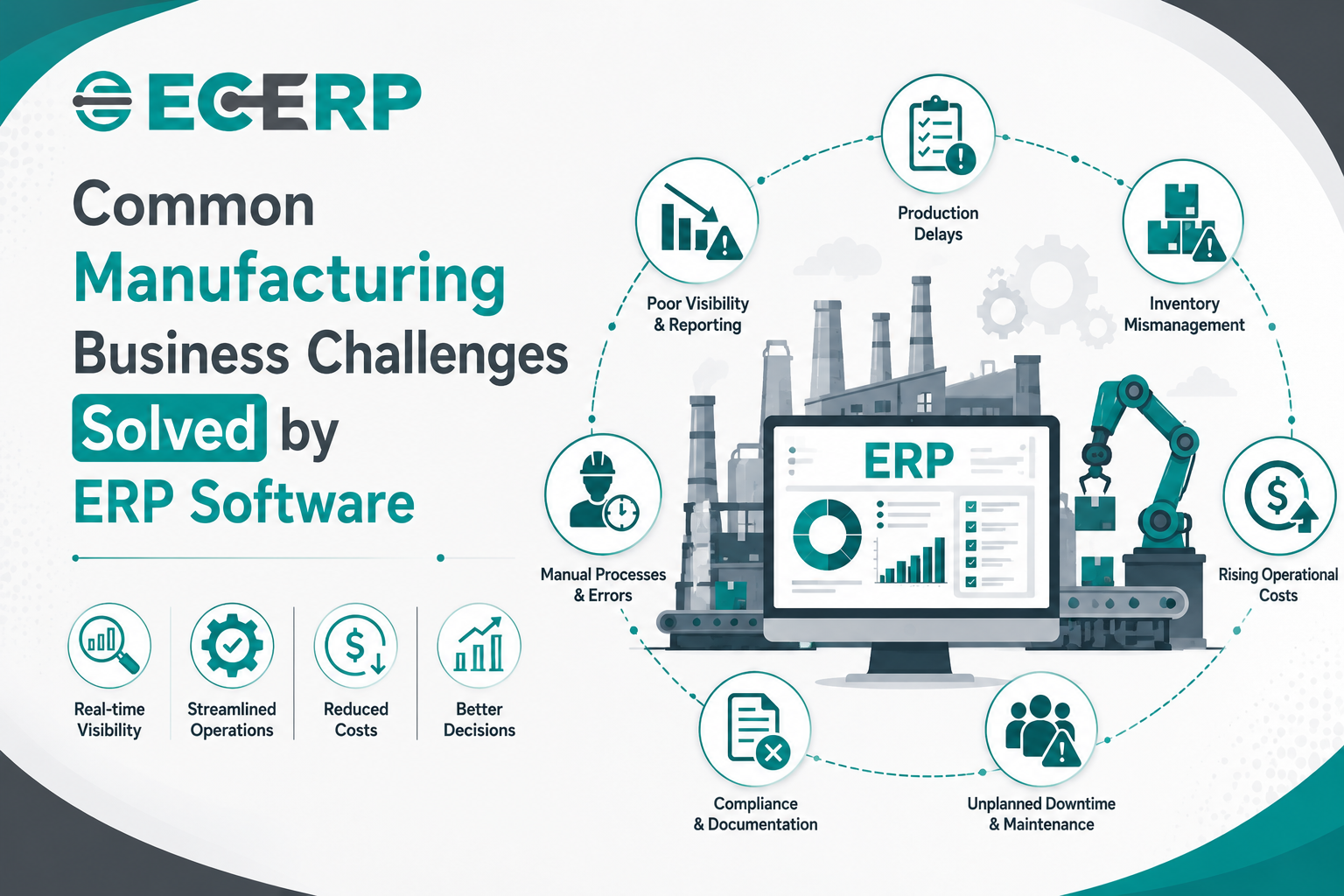
Overcome Manufacturing Challenges with Manufacturing ERP
The manufacturing industry is evolving rapidly. Rising customer expectations, increasing competition, complex supply chains, fluctuating raw material costs, and the need for faster production have made efficient business management more important than ever. While many manufacturers continue to rely on spreadsheets or disconnected software systems, these traditional methods often create inefficiencies that slow business growth.
This is where ERP Software becomes a game-changer.
A modern Manufacturing ERP Software solution integrates every core business function—including production planning, inventory management, procurement, sales, finance, quality control, and human resources—into one centralized platform. Instead of managing multiple systems, manufacturers gain real-time visibility into operations, improve collaboration across departments, and make faster, data-driven decisions.
Modern Human Resource Management Software helps organizations automate HR processes, centralize employee information, improve workforce productivity, and simplify day-to-day HR operations through a single integrated platform. Whether you are a startup, SME, manufacturing company, retail business, healthcare organization, educational institution, or large enterprise, implementing the right HR Management Software can significantly improve operational efficiency and employee experience.
Whether you are a small manufacturer, an MSME, or a large enterprise, investing in the right ERP Software for Manufacturing helps reduce operational costs, improve productivity, and build a more agile and competitive business. In this blog, we'll explore the most common manufacturing challenges and how Manufacturing ERP Software helps solve them through automation, real-time insights, and integrated business processes.
Why Manufacturing Businesses Need ERP Software
Manufacturing businesses manage hundreds of interconnected processes every day. From purchasing raw materials and planning production to monitoring inventory, managing customer orders, and delivering finished goods, every department depends on accurate and timely information.
When these activities are managed manually or through disconnected applications, organizations often face:
- Delayed production schedules
- Inventory shortages or excess stock
- Poor communication between departments
- Inaccurate production planning
- Manual data entry errors
- Rising operational costs
- Delayed customer deliveries
- Limited visibility into business performance
A comprehensive Manufacturing ERP System addresses these issues by providing one unified platform that connects every department and delivers real-time information across the organization.
With Cloud ERP Software, manufacturers can also access business data securely from anywhere, making it easier to manage multiple plants, warehouses, or branch locations.
What is Manufacturing ERP Software?
Manufacturing ERP Software is an integrated business management solution specifically designed to streamline and automate manufacturing operations.
Unlike standalone software applications, an ERP Software solution connects all business functions into a single database, ensuring consistent information and seamless collaboration between teams.
A modern Manufacturing ERP System typically includes modules for:
- Production Planning
- Inventory Management
- Purchase Management
- Sales Management
- Supply Chain Management
- Finance & Accounting
- Quality Management
- Warehouse Management
- Human Resource Management
- Payroll Management
- Customer Relationship Management (CRM)
- Business Intelligence & Analytics
With every department working from the same data, businesses can improve operational efficiency, reduce manual work, and respond more quickly to market demands.
Common Manufacturing Business Challenges Solved by ERP Software
Every manufacturing business faces unique operational challenges, but many of the underlying issues are common across industries. Here's how ERP Software helps overcome them.
1. Poor Inventory Management
Inventory is one of the most valuable assets for any manufacturing business. However, managing inventory manually often leads to stock inaccuracies, delayed production, unnecessary purchasing, and increased carrying costs.
Common inventory challenges include:
- Overstocking
- Stock shortages
- Inaccurate stock records
- Material wastage
- Manual inventory tracking
- Difficulty tracking batch or lot numbers
- Poor warehouse visibility
A modern Inventory Management Software within an ERP Software solution provides complete visibility into inventory levels in real time.
Manufacturers can:
- Monitor raw materials, work-in-progress, and finished goods
- Track inventory movement across warehouses
- Set minimum and maximum stock levels
- Automate purchase alerts
- Reduce inventory carrying costs
- Improve warehouse efficiency
With accurate inventory information available at all times, businesses can avoid production delays and improve customer service.
2. Production Planning Challenges
Efficient production planning is essential for meeting customer demand while controlling manufacturing costs.
Without an integrated system, manufacturers often struggle with:
- Production delays
- Machine downtime
- Material shortages
- Poor resource allocation
- Inefficient scheduling
- Missed delivery deadlines
An advanced Manufacturing ERP Software helps organizations create realistic production schedules based on available inventory, machine capacity, workforce availability, and customer demand.
Key capabilities include:
- Production scheduling
- Material Requirement Planning (MRP)
- Work order management
- Capacity planning
- Production tracking
- Shop floor monitoring
These features enable manufacturers to optimize production processes, reduce idle time, and improve on-time deliveries.
3. Lack of Real-Time Business Visibility
One of the biggest challenges manufacturers face is the inability to access accurate business information when it's needed.
When different departments maintain separate records, management often spends valuable time collecting data before making decisions.
A centralized ERP Software eliminates this problem by providing real-time dashboards and business intelligence tools.
Decision-makers can instantly monitor:
- Production status
- Inventory levels
- Sales performance
- Purchase orders
- Financial reports
- Customer orders
- Machine utilization
- Workforce productivity
This real-time visibility allows businesses to identify bottlenecks early, respond to operational issues faster, and make informed strategic decisions.
4. Manual Business Processes
Many manufacturing companies still depend on paper-based approvals, spreadsheets, and repetitive manual tasks.
These outdated processes often result in:
- Duplicate data entry
- Human errors
- Slow approvals
- Increased administrative work
- Data inconsistencies
- Reduced productivity
A modern Cloud ERP Software automates routine business processes across departments.
Examples include:
- Automated purchase workflows
- Sales order processing
- Production scheduling
- Inventory updates
- Invoice generation
- Payroll processing
- Approval workflows
- Business reporting
Automation reduces manual effort, improves accuracy, and enables employees to focus on higher-value activities that support business growth.
5. Supply Chain Inefficiencies
A manufacturing business is only as efficient as its supply chain. Delays in procuring raw materials, poor supplier communication, inaccurate demand forecasting, and lack of shipment visibility can disrupt production schedules and increase operational costs.
Common supply chain challenges include:
- Delayed procurement
- Supplier communication gaps
- Material shortages
- Excess inventory
- Delivery delays
- Lack of demand forecasting
- Poor warehouse coordination
An integrated Supply Chain Management module within Manufacturing ERP Software helps businesses gain complete visibility across the procurement and distribution process.
With ERP Software, manufacturers can:
- Monitor supplier performance
- Automate purchase requisitions and purchase orders
- Track incoming materials in real time
- Forecast demand based on historical sales data
- Optimize inventory replenishment
- Improve warehouse coordination
- Reduce procurement lead times
By connecting purchasing, inventory, production, and sales, manufacturers can build a more resilient and responsive supply chain.
6. Quality Control and Product Consistency
Maintaining consistent product quality is essential for customer satisfaction and long-term business success. Manual quality inspection processes often make it difficult to identify defects early, resulting in increased rework, waste, and customer complaints.
Manufacturers commonly face:
- Inconsistent product quality
- Production defects
- High rejection rates
- Lack of inspection records
- Customer complaints
- Costly rework
A modern Manufacturing ERP System integrates Quality Management directly into production workflows.
Key capabilities include:
- Quality inspection checkpoints
- Batch and lot traceability
- Non-conformance tracking
- Corrective and preventive action management
- Inspection reports
- Product quality analytics
These features help businesses detect quality issues early, improve compliance with industry standards, and consistently deliver high-quality products.
7. Procurement and Vendor Management Challenges
Efficient procurement is critical for uninterrupted manufacturing operations. Manual purchasing processes often lead to duplicate orders, supplier delays, inconsistent pricing, and poor vendor communication.
With an integrated Purchase Management module, ERP Software enables manufacturers to:
- Create automated purchase requests
- Generate purchase orders instantly
- Compare supplier quotations
- Track order status
- Monitor supplier performance
- Maintain vendor price histories
- Schedule recurring purchases
Automated procurement reduces manual intervention, improves supplier relationships, and ensures raw materials are available when needed.
8. Financial Management and Cost Control
Managing manufacturing finances involves tracking production costs, inventory valuation, procurement expenses, sales revenue, taxes, and overall profitability. When finance operates separately from production and inventory, businesses often struggle with delayed reporting and inaccurate financial data.
A fully integrated ERP Software connects finance with every operational department.
Manufacturers gain access to:
- General Ledger
- Accounts Receivable
- Accounts Payable
- Cash Flow Management
- Budget Monitoring
- Cost Center Tracking
- Inventory Valuation
- Financial Statements
- Profitability Analysis
With real-time financial reporting, management can monitor expenses, improve cash flow, and make informed strategic decisions.
9. Sales and Customer Order Management
Customer expectations continue to rise, and manufacturers must respond with faster quotations, accurate order tracking, and timely deliveries.
Without an integrated system, businesses often encounter:
- Delayed quotations
- Order processing errors
- Poor order tracking
- Delivery delays
- Limited customer communication
A modern ERP Software streamlines the complete sales process by integrating Sales Management with inventory, production, and finance.
Manufacturers can:
- Generate quotations quickly
- Convert quotations into sales orders
- Track customer orders in real time
- Monitor production progress
- Plan deliveries efficiently
- Improve customer communication
This results in faster order fulfillment, higher customer satisfaction, and improved business relationships.
10. Human Resource and Workforce Management
Employees are the backbone of every manufacturing organization. Managing a large workforce manually can lead to attendance discrepancies, payroll errors, inefficient shift planning, and compliance challenges.
An integrated Human Resource Management module within Manufacturing ERP Software helps businesses efficiently manage their workforce.
Key capabilities include:
- Employee Information Management
- Attendance Management
- Shift Scheduling
- Leave Management
- Payroll Processing
- Overtime Management
- Performance Evaluation
- Employee Self-Service Portal
- Statutory Compliance
With automated HR and payroll processes, manufacturers improve workforce productivity while reducing administrative effort.
Benefits of an Integrated Manufacturing ERP Software
Implementing a comprehensive Manufacturing ERP Software solution provides benefits that extend across every department.
Some of the key advantages include:
Improved Operational Efficiency
Automate repetitive tasks, eliminate duplicate data entry, and streamline business workflows to improve productivity.
Real-Time Business Visibility
Access live dashboards, reports, and analytics to monitor production, inventory, finance, procurement, and sales from a single platform.
Better Decision-Making
Use accurate, real-time data to make informed business decisions, identify bottlenecks, and improve strategic planning.
Reduced Operational Costs
Optimize inventory, reduce material wastage, improve resource utilization, and minimize production delays to control costs.
Enhanced Customer Satisfaction
Deliver products on time, maintain consistent quality, and provide accurate order updates to strengthen customer relationships.
Improved Compliance
Maintain statutory compliance, quality standards, and complete audit trails with automated documentation and reporting.
Increased Business Scalability
Whether expanding production capacity, opening new branches, or entering new markets, Cloud ERP Software grows with your business without disrupting operations.
Moving Towards Smarter Manufacturing
Modern manufacturers need more than standalone software applications. They require an integrated business platform that connects every department, improves visibility, and supports continuous improvement.
A robust Manufacturing ERP Software solution helps businesses overcome operational challenges, improve efficiency, reduce costs, and build a strong foundation for digital transformation.
Why Digital Transformation Starts with ERP
Digital transformation is no longer optional for manufacturers that want to remain competitive. Businesses need accurate information, connected processes, and the ability to respond quickly to changing customer demands.
By implementing an integrated Manufacturing ERP Software solution, organizations can automate operations, improve collaboration, increase productivity, and gain complete visibility into every aspect of their business.
Essential Features Every Manufacturing ERP Software Should Have
Not all ERP systems are designed specifically for manufacturers. The ideal Manufacturing ERP Software should support end-to-end business operations while remaining scalable and easy to use.
Here are some of the most important features to consider.
1. Production Planning & Scheduling
Efficient production planning ensures that manufacturing operations run smoothly while meeting customer delivery commitments.
A robust ERP solution should help businesses:
- Plan production orders
- Schedule manufacturing activities
- Allocate machines and manpower
- Track production progress
- Monitor work orders
- Reduce production bottlenecks
Automated production planning improves resource utilization and minimizes delays.
2. Inventory & Warehouse Management
Inventory directly impacts manufacturing costs and customer satisfaction.
A comprehensive Inventory Management module enables businesses to:
- Monitor stock levels in real time
- Track raw materials, WIP, and finished goods
- Manage multiple warehouses
- Track batch and lot numbers
- Automate stock replenishment
- Reduce excess inventory
Real-time inventory visibility helps manufacturers avoid shortages and unnecessary carrying costs.
3. Procurement & Vendor Management
Efficient procurement ensures that production never stops due to material shortages.
An integrated procurement module should allow businesses to:
- Manage supplier databases
- Generate purchase orders
- Compare supplier quotations
- Track material deliveries
- Monitor vendor performance
- Control procurement costs
This strengthens supplier relationships while improving purchasing efficiency.
4. Finance & Accounting Integration
Manufacturing decisions often depend on accurate financial information.
An integrated ERP Software connects finance with inventory, purchasing, sales, and production, enabling businesses to:
- Track manufacturing costs
- Monitor profitability
- Manage accounts payable and receivable
- Generate financial statements
- Analyze cost centers
- Improve cash flow management
This eliminates duplicate data entry and provides management with real-time financial visibility.
5. Quality Management
Quality is a key differentiator in manufacturing.
An effective ERP solution should support:
- Quality inspections
- Batch traceability
- Defect tracking
- Non-conformance management
- Corrective action workflows
- Quality reports
This helps maintain consistent product quality while reducing waste and rework.
6. Human Resource & Payroll Management
People are one of the most valuable assets in manufacturing.
Integrated HRMS and Payroll Management modules help organizations manage:
- Employee records
- Attendance
- Shift scheduling
- Leave management
- Payroll processing
- Overtime calculations
- Performance evaluations
By automating workforce management, manufacturers improve productivity while reducing administrative effort.
7. Business Intelligence & Analytics
Successful manufacturers rely on data rather than assumptions.
Modern ERP Software provides interactive dashboards and reports that help management monitor:
- Production performance
- Inventory turnover
- Sales trends
- Purchase expenses
- Machine utilization
- Employee productivity
- Financial performance
These insights enable faster and more informed business decisions.
Cloud ERP Software vs Traditional ERP
As businesses embrace digital transformation, many manufacturers are replacing traditional on-premise systems with Cloud ERP Software
Here's why cloud-based ERP is becoming the preferred choice.
With Cloud ERP Software, manufacturers gain greater flexibility, lower IT costs, enhanced security, and improved collaboration across multiple locations.
How ERP Software Supports Digital Transformation
Digital transformation is changing the manufacturing landscape. Companies that rely on manual processes often struggle to compete with organizations that use integrated, data-driven systems.
ERP Software plays a central role in this transformation by:
- Automating repetitive business processes
- Eliminating paper-based workflows
- Connecting departments through a centralized database
- Improving collaboration across teams
- Providing real-time operational visibility
- Enabling faster decision-making
- Supporting remote access and mobile workforce management
- Improving customer responsiveness
By digitizing core business operations, manufacturers become more agile, productive, and competitive.
Emerging Technologies Shaping the Future of Manufacturing ERP
The next generation of Manufacturing ERP Software is powered by intelligent technologies that enhance efficiency and business performance.
Artificial Intelligence (AI)
AI helps manufacturers analyze large volumes of operational data, predict demand, identify production bottlenecks, and improve planning accuracy.
Internet of Things (IoT)
IoT-enabled machines can send real-time production and equipment data directly into the ERP system, enabling proactive maintenance and improved operational control.
Predictive Analytics
Advanced analytics help businesses forecast inventory requirements, optimize production schedules, and identify trends before they impact operations.
Mobile ERP
Mobile access allows managers and employees to monitor production, approve transactions, review reports, and access business information from anywhere.
Workflow Automation
Automated approval workflows reduce manual intervention, speed up business processes, and improve overall efficiency.
How to Choose the Right Manufacturing ERP Software
Selecting the right ERP solution is a strategic investment that influences every area of your business.
When evaluating Manufacturing ERP Software, consider the following:
- Industry-specific manufacturing features
- Production planning capabilities
- Inventory and warehouse management
- Procurement and vendor management
- Finance and accounting integration
- HRMS and payroll functionality
- Cloud deployment options
- Mobile accessibility
- Customization flexibility
- Integration with existing business applications
- Data security and compliance
- Business intelligence and reporting
- Vendor implementation experience
- Ongoing customer support
- Scalability for future growth
Choosing a solution that aligns with your operational needs and growth plans ensures long-term business value.
Preparing for Sustainable Manufacturing Growth
Manufacturers that invest in a modern Cloud ERP Software platform are better positioned to improve operational efficiency, reduce costs, enhance customer satisfaction, and respond quickly to market changes.
An integrated ERP system provides the visibility, automation, and intelligence required to support continuous improvement and sustainable business growth.
Frequently Asked Questions (FAQs)
1. What is Manufacturing ERP Software?
Manufacturing ERP Software is an integrated business management solution that connects production planning, inventory management, procurement, sales, finance, quality control, human resources, payroll, and customer management into one centralized platform.
It enables manufacturers to automate operations, improve efficiency, reduce costs, and make informed business decisions using real-time data.
2. Why do manufacturing companies need ERP Software?
Manufacturing businesses manage multiple interconnected processes every day. Without an integrated system, organizations often face inventory inaccuracies, production delays, communication gaps, manual errors, and rising operational costs.
A modern ERP Software solution helps businesses:
- Automate manufacturing operations
- Improve inventory accuracy
- Streamline production planning
- Simplify procurement
- Improve financial control
- Enhance customer service
- Increase workforce productivity
3. Is Cloud ERP Software suitable for manufacturing companies?
Yes.
Cloud ERP Software is ideal for manufacturers because it offers:
- Secure anytime, anywhere access
- Lower infrastructure costs
- Automatic software updates
- Faster implementation
- Easy scalability
- Improved collaboration across multiple locations
- Enhanced business continuity through secure cloud backups
Cloud deployment also supports hybrid work environments and multi-plant manufacturing operations.
4. Can ERP Software improve production efficiency?
Absolutely.
A modern Manufacturing ERP System improves production efficiency by:
- Automating production planning
- Scheduling work orders
- Managing material requirements
- Monitoring machine utilization
- Reducing downtime
- Tracking production progress in real time
This helps manufacturers increase output while reducing operational costs.
5. How does ERP Software improve inventory management?
Integrated Inventory Management Software enables manufacturers to:
- Track stock levels in real time
- Monitor raw materials, work-in-progress, and finished goods
- Reduce stock shortages
- Prevent overstocking
- Improve warehouse management
- Automate inventory replenishment
Accurate inventory information ensures uninterrupted production and better customer service.
6. Can ERP Software integrate with other business applications?
Yes.
Modern ERP Software integrates seamlessly with:
- Accounting Software
- CRM Software
- HRMS Software
- Payroll Software
- Biometric Devices
- Barcode Systems
- Warehouse Management Systems
- Business Intelligence Tools
- Third-party applications
This eliminates duplicate data entry and improves operational efficiency.
7. Is ERP Software suitable for SMEs and large manufacturers?
Yes.
Whether you are a startup, MSME, medium-sized manufacturer, or large enterprise, Manufacturing ERP Software can be customized to match your operational requirements.
As your business grows, the ERP system can scale by supporting:
- Additional users
- Multiple factories
- New warehouses
- Branch offices
- Increased production capacity
8. What industries benefit from Manufacturing ERP Software?
ERP solutions support a wide range of manufacturing industries, including:
- Engineering & Industrial Manufacturing
- Automobile & Auto Components
- Electrical & Electronics
- Machinery Manufacturing
- Food & Beverage
- Pharmaceuticals
- Chemicals
- Plastics & Rubber
- Textile & Garments
- Furniture Manufacturing
- Packaging Industry
- Medical Device Manufacturing
- Metal Fabrication
- Consumer Goods Manufacturing
Why Choose ECERP Manufacturing ERP Software?
Choosing the right ERP solution is one of the most important decisions for any manufacturing business. ECERP - Manufacturing ERP Software is designed to simplify operations, automate workflows, and provide complete visibility across every department.
With ECERP Manufacturing ERP Software, your business can:
- Automate end-to-end manufacturing operations
- Improve production planning and scheduling
- Optimize inventory and warehouse management
- Streamline procurement and vendor management
- Strengthen quality control and batch traceability
- Integrate finance, accounting, HRMS, and payroll
- Gain real-time dashboards and business analytics
- Manage multiple plants, warehouses, and branches
- Improve collaboration between departments
- Reduce operational costs and manual errors
- Enhance customer satisfaction through timely deliveries
- Scale your business with secure Cloud ERP technology
Key Business Benefits of Manufacturing ERP Software
Organizations implementing a modern Manufacturing ERP Software solution often experience measurable improvements across their operations.
Some of the key benefits include:
Improved Productivity
Automate repetitive tasks and streamline workflows to increase operational efficiency.
Better Inventory Control
Monitor inventory in real time, reduce stock shortages, and optimize warehouse operations.
Faster Production Planning
Plan and monitor production efficiently while minimizing delays and downtime.
Real-Time Business Visibility
Access live dashboards, reports, and analytics to make informed business decisions.
Improved Financial Management
Integrate finance with production, procurement, inventory, and sales for complete financial visibility.
Stronger Quality Control
Maintain product consistency through automated inspections, traceability, and quality management processes.
Enhanced Customer Satisfaction
Deliver products on time, improve order accuracy, and strengthen customer relationships.
Scalable Business Growth
Support business expansion with flexible Cloud ERP Software that grows alongside your organization.
Final Thoughts
The manufacturing industry is becoming increasingly competitive, and businesses can no longer rely on manual processes or disconnected software systems to manage their operations effectively.
A modern Manufacturing ERP Software solution provides the technology foundation needed to connect every department, automate routine tasks, improve operational visibility, and support smarter decision-making.
From production planning and inventory management to procurement, finance, quality control, human resources, and customer management, ERP Software helps manufacturers simplify complex operations while preparing for long-term growth.
Whether you're an MSME looking to streamline day-to-day operations or a large enterprise planning digital transformation, implementing the right ERP solution can significantly improve productivity, reduce costs, and strengthen your competitive advantage.
Ready to Transform Your Manufacturing Business?
If you're looking for a powerful, scalable, and user-friendly ECERP - Manufacturing ERP is built to help you manage your entire manufacturing operation from one integrated platform.
With ECERP, you can:
- Automate production planning
- Optimize inventory management
- Streamline procurement
- Simplify finance and accounting
- Improve quality control
- Manage HRMS and payroll
- Access real-time business dashboards
- Enhance operational efficiency across multiple plants and branches
Whether your goal is to increase productivity, reduce operational costs, improve customer satisfaction, or accelerate digital transformation, ECERP Manufacturing ERP Software provides the tools your business needs to succeed.
Request a FREE Demo Today
Discover how ECERP - Manufacturing ERP can help your business automate processes, improve efficiency, and achieve sustainable growth with one intelligent, integrated ERP platform.